
Why Predictive Maintenance Will Change the Way You Manage Repairs Forever

Managing a property in Greater Vancouver often feels like waiting for the next shoe to drop: the sudden leak in the 4th-floor suite, the failing boiler on a holiday weekend, or the dreaded special levy that catches everyone off guard. For too long, the industry standard has been reactive. You wait for something to break, and then you pay a premium to fix it. This cycle is not just stressful; it is financially draining and structurally risky. At Etogo, we are shifting the paradigm. We believe that the future of property management isn't just about managing tenants: it's about managing the health of the building itself. This transition from reactive repairs to predictive maintenance is what we call Stewardship. Predictive maintenance uses data, recurring inspections, and professional oversight to identify issues before they manifest as emergencies. It is the difference between a minor adjustment today and a catastrophic failure tomorrow. The Problem with the Reactive Trap Most property owners and strata councils operate in a state of "unplanned urgency." When you wait for a failure to occur, you lose control over your timeline and your budget. Emergency repairs are inherently more expensive. You pay for rush labor, expedited parts, and the secondary damage that occurs when a system fails. A leaking pipe doesn't just require a plumber; it often requires drywallers, flooring specialists, and restoration experts. This reactive cycle erodes your Net Operating Income (NOI) and creates a culture of "band-aid" fixes. If you are only ever putting out fires, you never have the opportunity to improve the asset. This is not efficient property management. It is crisis management. The Property Health Assessment Report (PHAR): Your Diagnostic Starting Point Every successful predictive strategy begins with a baseline. You cannot manage what you do not measure. At Etogo, our process begins with the Property Health Assessment Report (PHAR). Think of the PHAR as a comprehensive physical for your building. Our team of experts conducts a deep-dive inspection into every critical system, from the structural integrity of the foundation to the electrical load of the building. Comprehensive Evaluation: We look at the building envelope, roofing, mechanical systems, and common areas. Risk Categorization: Issues are identified and ranked by urgency and impact. Financial Mapping: We provide a clear picture of what needs attention now and what will need attention in five years. The PHAR removes the guesswork. It transforms invisible risks into visible, manageable data points. By starting with a Comprehensive Home Health Assessment, you gain the clarity needed to stop reacting and start leading. Moving from Surprise Expenses to Predictable Budgets One of the greatest stressors for Vancouver homeowners and investors is the "financial surprise." A sudden $50,000 roof repair or a $20,000 boiler replacement can derail an entire year's financial goals. Predictive maintenance changes the financial narrative. By identifying the remaining useful life of building components, we can build a Customized Preventative Care Plan. Instead of facing a sudden spike in expenses, owners can allocate funds incrementally. This creates a smooth, predictable budget that protects cash flow and prevents the need for high-interest emergency loans or disruptive special levies. Budget Certainty: Know your maintenance costs months or even years in advance. Value Preservation: Consistent upkeep prevents the "deferred maintenance discount" when it comes time to sell or refinance. Operational Efficiency: We group repairs together to save on site preparation and mobilization costs. Active Stewardship: The Power of Recurring Inspections The core of predictive maintenance is Active Stewardship. This is not a "set it and forget it" service. It is a continuous commitment to the health of the property. Our Your Dedicated Home Steward Team conducts Monthly Home Visits and recurring inspections to track the performance of your building's systems over time. We look for the subtle signs of wear that a standard property manager might miss: Slow-moving drains that indicate a future hydraulics failure. Hairline cracks in the basement that signal moisture ingress issues. Minor wear on architectural finishes that could lead to structural rot if left unaddressed. By tracking this data, we can predict failure windows with high accuracy. If we see a pump's performance degrading over six months, we can schedule its replacement during a planned downtime, avoiding a mid-winter emergency. Impact on Net Operating Income (NOI) For investors and landlords, the ultimate metric is Net Operating Income (NOI). Predictive maintenance is the most effective lever you have for increasing NOI over the long term. Lower Total Cost of Ownership: It is statistically proven that preventative maintenance costs significantly less than reactive repairs. Reduced Vacancy: Buildings that are well-maintained attract higher-quality tenants and command higher rents. Minimized Secondary Damage: By catching a leak early, you save the cost of replacing flooring and cabinets in the kitchen or bathroom. Extended Asset Life: Predictive care can extend the life of major systems by 20-30%, delaying massive capital expenditures. When you Manage Repairs with Etogo, you are investing in the profitability of your asset. We take the burden of technical oversight off your shoulders, allowing you to focus on your investment strategy while we ensure the building performs at its peak. Why Greater Vancouver Needs This Now The Greater Vancouver market presents unique challenges. Our climate is demanding on building envelopes, and our local regulations for multi-family dwellings are increasingly complex. Whether you are managing a heritage home in Kitsilano or a modern strata in Burnaby, the "wait and see" approach is no longer viable. The cost of labor and materials in BC is rising: meaning every emergency repair you avoid is a significant win for your bottom line. From site preparation for minor upgrades to full construction management for larger restorations, having a partner who understands the lifecycle of a building is essential. Who This Is For Our Stewardship approach is specifically designed for: Individual Homeowners: Who want to protect their primary investment and ensure their home remains safe and functional for decades. Real Estate Investors: Who need to maximize NOI and minimize the "headache factor" of property ownership. Strata
Strata & Property Management FAQs: The Etogo Stewardship Model
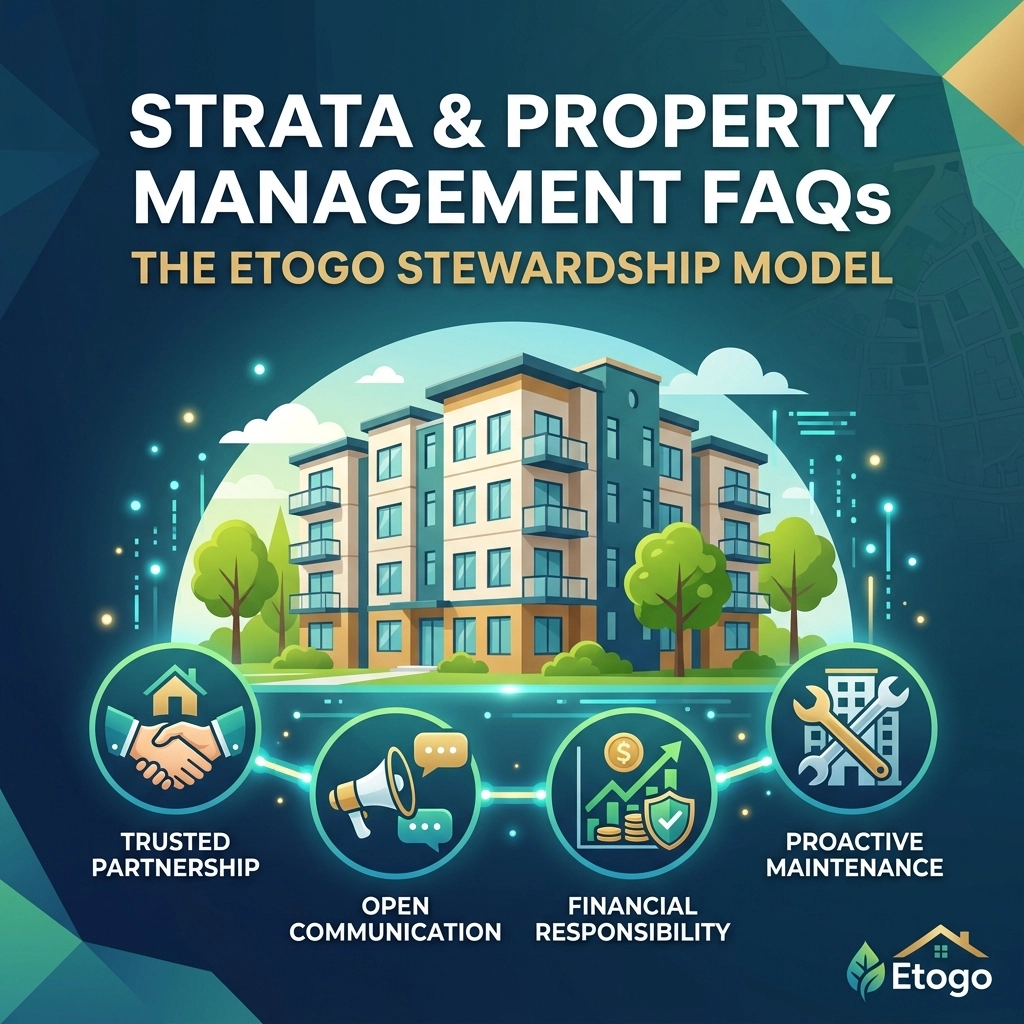
Managing a multi-unit residential building or a commercial portfolio requires more than just a contact list for plumbers and electricians. It requires a systematic approach to asset preservation. In the current real estate climate, Strata Councils and Property Managers face rising insurance premiums, escalating labor costs, and aging infrastructure. The traditional model of "fix it when it breaks" is no longer financially viable. It is reactive, expensive, and leads to the premature degradation of property value. Etogo Home Stewardship™ was designed to replace this chaos with clarity. By shifting from reactive repairs to proactive stewardship, we help buildings operate with the precision of a high-performing asset. Who This Is For This guide is specifically designed for: Strata Council Members looking to reduce special levies and stabilize monthly fees. Property Managers who need professional, data-backed reporting to present to their boards. Commercial Asset Managers focused on maximizing Net Operating Income (NOI). Real Estate Investors aiming to protect the long-term structural integrity of their holdings. The Core Concept: Stewardship vs. Maintenance Traditional maintenance is a transaction. Something breaks; someone fixes it. Property stewardship is a philosophy of long-term care. It is an ongoing commitment to monitoring, assessing, and intervening before a failure occurs. This approach treats the building as an integrated system rather than a collection of isolated parts. This is not emergency repair work. While we handle the immediate needs, our primary objective is to ensure those emergencies never happen in the first place. Frequently Asked Questions 1. How does Etogo work with our existing Property Manager? We do not replace your Property Manager; we empower them. Most Property Managers are spread thin, managing administrative tasks, bylaws, and financial records for multiple buildings. They are often forced into a "firefighting" role: reacting to leaks, elevator failures, and tenant complaints. Etogo acts as the technical arm for the Property Manager. Technical Expertise: We provide the on-site inspections and technical data that Property Managers usually lack the time or specific training to collect. Streamlined Communication: Our reports provide clear, actionable evidence that the Property Manager can present to the Strata Council to get quick approvals. Vendor Coordination: By identifying the exact scope of work through our PHAR, we ensure that third-party contractors quote accurately and don't overcharge for unnecessary work. Why It Matters: A well-informed Property Manager can make better decisions, leading to a smoother-running building and higher resident satisfaction. 2. Is the PHAR different from a Depreciation Report? Yes. This is perhaps the most critical distinction in modern property management. A Depreciation Report is a financial forecasting tool. It estimates the remaining life of major components (roofing, windows, boilers) and calculates the necessary reserve fund contributions over 30 years. It is a "top-down" look at the building’s finances. The Property Health Assessment Report (PHAR) is an evidence-based diagnosis and action plan. It is a "bottom-up" look at the building's physical reality. Evidence-Driven: We don't guess based on the age of the building; we inspect the current state of the envelope, mechanical systems, and common areas. Action-Oriented: While a Depreciation Report tells you when you might need money, the PHAR tells you what to do now to extend the life of those components and potentially delay that massive capital expenditure. The One Source of Truth: The PHAR serves as a centralized record, tracking the evolution of the property's health over time. Why It Matters: Relying solely on a Depreciation Report can lead to "planned" replacements of systems that could have lasted another decade with proper stewardship, saving the Strata hundreds of thousands of dollars. 3. What is the immediate ROI of Etogo Home Stewardship™? The Return on Investment (ROI) of proactive stewardship manifests in three distinct ways: Direct Cost Avoidance: Preventing a single major water ingress event through proactive sealant and membrane maintenance can save tens of thousands in insurance deductibles and restoration costs. Extended Asset Lifespan: Extending the life of a $200,000 roof by just five years through regular cleaning and minor repairs provides a massive internal rate of return on the stewardship fees. Enhanced Market Value: Buildings with a documented history of professional stewardship: backed by PHAR data: are significantly more attractive to prospective buyers and insurers. Why It Matters: Proactive care is a capital preservation strategy. Every dollar spent on stewardship typically saves five to ten dollars in emergency repairs and lost asset value. 4. How do we start the process? Transitioning to the Etogo model follows a structured, four-stage process designed to minimize disruption to residents. Diagnosis: We gather existing building documentation and complete the initial PHAR to establish the baseline health of the property. Remediation: We prioritize and resolve the highest-risk issues identified in the report, starting with critical "Red Zone" items. Active Stewardship: We begin the recurring cycle of inspections, seasonal servicing, and preventive maintenance. Intelligent Property Management: We maintain the PHAR as the centralized record for property health, service history, and decision-making. Why It Matters: A structured start ensures that no critical issues are missed as the building moves from reactive repairs to proactive stewardship. Proactive vs. Reactive: The Financial Reality To understand the value of Etogo Home Stewardship™, one must understand the "Cost of Failure" curve. In a Reactive Model, costs stay low until a system fails. At the point of failure, the cost spikes due to emergency labor rates, expedited material shipping, and secondary damage (e.g., a pipe burst damaging five floors of flooring). In the Proactive Model, a small, consistent investment in monitoring and minor adjustments keeps the system operating within its optimal parameters. Reactive: High volatility, high risk, high long-term cost. Proactive: Low volatility, low risk, low long-term cost. Etogo's methodology is built to flatten the cost curve, making property expenses predictable and manageable. Detailed Service Breakdown Our stewardship model is comprehensive. We don't just look at the big things; we look at the things that become big things. Building Envelope Monitoring We inspect seals, joints, and membranes. Identifying a failing window seal in year two prevents a structural rot issue
PHAR 101: A Beginner’s Guide to Mastering Proactive Property Maintenance
Property ownership is often marketed as a form of passive income. However, seasoned investors and strata councils know the reality: a building is a living, breathing entity that requires constant attention. The traditional approach to maintenance is reactive: waiting for a pipe to burst or an HVAC unit to fail before calling for help. This is the most expensive way to manage an asset. At Etogo, we advocate for a different standard: PHAR (Property Health & Asset Resilience). This framework shifts the focus from "fixing what is broken" to "maintaining what is working." This guide serves as your introduction to mastering proactive property maintenance in the modern BC real estate landscape. What is Proactive Property Maintenance? Proactive maintenance involves regularly servicing and inspecting systems before problems arise. It is the practice of identifying potential failure points and addressing them during scheduled windows rather than during an emergency. This is not emergency repair work. Emergency repairs are chaotic, expensive, and disruptive. Proactive maintenance is controlled, budgeted, and predictable. By implementing a systematic approach, you transition from a "firefighting" mindset to a stewardship mindset. The Core Difference: Reactive vs. Proactive Reactive: You replace a water heater after it floods a basement, resulting in structural damage and insurance claims. Proactive: You inspect the anode rod and pressure valve annually, replacing the unit at the end of its projected lifespan before it fails. Maintaining a building in its optimal condition requires a shift in how you view service calls. At Etogo, our preventive maintenance services are designed to catch the "small" issues today so they don't become the catastrophes of tomorrow. Why It Matters: The Financial Case for PHAR The primary motivation for proactive maintenance is financial resilience. While there is an upfront cost to inspections and routine servicing, the Return on Investment (ROI) is significant. 1. Extension of Asset LifespanMechanical systems like HVAC units and elevators are capital-heavy investments. Regular servicing can extend the lifespan of building equipment by up to 10 times: delaying massive capital expenditures. 2. Mitigation of Insurance CostsInsurance deductibles in British Columbia have reached historic highs, particularly for water damage. Demonstrating a history of proactive plumbing inspections can help manage premiums and protect your strata stewardship efforts. 3. Operational EfficiencySystems that are clean and well-calibrated run more efficiently. This translates directly to lower utility bills for heating, cooling, and water usage. 4. Reduced Tenant TurnoverReliable buildings keep tenants happy. When appliances work and the environment is well-maintained, you reduce the frequency of rental turnover services, which is one of the highest costs for any landlord. Who This Is For The PHAR framework is not exclusive to large-scale commercial developers. It is essential for anyone responsible for the long-term health of a property: Individual Landlords: Protect your retirement asset and ensure your rental income isn't wiped out by one major repair. Strata Councils: Meet your fiduciary duty to the owners by preserving the common property and managing the reserve fund effectively. Property Managers: Streamline your operations by reducing the volume of emergency middle-of-the-night phone calls. Commercial Owners: Ensure business continuity by preventing system failures that could shut down a tenant's operations. The Three Pillars of the PHAR Framework To master proactive maintenance, you must move beyond a simple "to-do" list. You need a system built on three specific pillars. 1. Systematic Inspections Regular inspections are the foundation of proactive care. These are meticulous assessments performed at set intervals (quarterly, bi-annually, or annually). Visual Assessments: Checking for cracks, leaks, or wear. Diagnostic Testing: Using technology to check electrical loads or thermal leaks. Functional Checks: Ensuring safety systems like smoke detectors and emergency lighting are operational. 2. Scheduled Preventive Tasks This involves the actual "hands-on" work required to keep systems running. Lubrication: Keeping moving parts in mechanical systems from seizing. Filter Changes: Ensuring air quality and reducing strain on motors. Clearing Obstructions: Cleaning gutters and drains to prevent water ingress. 3. Detailed Documentation If it isn't documented, it didn't happen. Keeping a digital paper trail of every inspection, repair, and service call is vital for: Warranty Claims: Proving the equipment was maintained according to manufacturer standards. Compliance: Meeting the increasingly strict BC Depreciation Report requirements. Resale Value: Providing a "maintenance log" to prospective buyers to prove the building's health. Your Proactive Maintenance Checklist Developing a comprehensive checklist is the first step toward implementing PHAR. Use the following categories to organize your efforts. The Mechanical & HVAC System Replace Air Filters: Monthly or quarterly depending on building occupancy. Inspect Thermostats: Verify calibration to ensure energy efficiency. Clean Condenser Coils: Prevents the unit from overheating during summer months. Check Belts and Pulleys: Replace worn components before they snap. The Plumbing System Leak Detection: Check under sinks, around toilets, and near water heaters. Drain Maintenance: Clear organic buildup before it causes a backup. Water Heater Flush: Remove sediment to maintain heating efficiency. Sump Pump Testing: Ensure functionality before the rainy season begins. The Building Envelope & Exterior Gutter Cleaning: Prevent water from overflowing and damaging the foundation. Roof Inspection: Look for missing shingles or blocked scuppers. Sealant Assessment: Check window caulking and expansion joints for cracks. Vegetation Management: Trim trees and bushes away from the siding to prevent moisture traps. Safety and Compliance Smoke/CO Detectors: Test monthly and replace batteries annually. Fire Extinguishers: Verify pressure gauges and annual certification tags. Emergency Lighting: Perform a 30-minute burn test to ensure battery health. Addressing Issues Promptly: The 24-Hour Rule A key component of the PHAR strategy is the speed of response. When an inspection reveals a "minor" issue: such as a small leak in a sealant or a frayed electrical wire: it must be addressed within 24 to 48 hours. Delaying small repairs leads to compounding damage. For example, a failed window seal seems minor. However, left unaddressed, it allows moisture to enter the wall cavity. This leads to mold, rot, and eventual structural failure. What would have been a $200 sealant repair becomes a $20,000 remediation project. Overcoming the "Cost" Barrier The most common objection
Cosmetic Renovations vs. Structural Repairs: Which Is Better For Your Property’s Long-Term ROI?

Every property owner eventually faces the same dilemma: should you spend your budget on the upgrades people can see, or the repairs they can’t? In the competitive British Columbia real estate market, the pressure to maintain high-yield assets is constant. Whether you are managing a single-family rental in Port Moody or overseeing a massive strata complex in Vancouver, the way you allocate capital determines your long-term Return on Investment (ROI). There is a fine line between increasing a property's marketability and ensuring its structural survival. One drives the sale; the other preserves the asset. At Etogo, we specialize in Property Health & Maintenance. We see the results of these decisions every day. This guide breaks down the financial and operational impact of cosmetic versus structural investments to help you make data-driven decisions for your portfolio. Who This Is For This analysis is specifically designed for: Professional Landlords looking to maximize rental income and minimize turnover costs. Strata Council Members responsible for long-term contingency reserve fund (CRF) planning. Real Estate Investors preparing a property for a high-value exit. Commercial Property Managers focused on reducing long-term liability and insurance premiums. The Case for Cosmetic Renovations: The "Visual Value" Cosmetic renovations are the most popular choice for a reason. They offer immediate gratification and a visible boost to a property's perceived value. If your building has "good bones," these updates are your fastest route to a higher ROI. High-Impact Cosmetic Updates Research indicates that specific cosmetic improvements yield the highest percentage returns on investment: Minor Kitchen Refreshes (85–100% ROI): Replacing cabinet hardware, installing a modern backsplash, or updating old appliances. Bathroom Modernization (70–90% ROI): Swapping out dated fixtures, updating lighting, and re-grouting tiles. Fresh Paint and Flooring: A neutral, professional color palette creates a "move-in ready" feel that attracts premium tenants. Curb Appeal: Basic landscaping and exterior lighting improvements: instantly increasing the property's desirability. Why It Matters Cosmetic updates drive shorter vacancy periods: the faster a tenant moves in, the sooner your ROI begins to compound. In 2026, renters are looking for "Instagram-ready" spaces. A property that looks dated will sit on the market, even if its structural integrity is perfect. However, cosmetic work has a shelf life. Trends change. What looks modern today may look dated in seven years. These investments require more frequent cycles of reinvestment to maintain their impact. The Critical Nature of Structural Repairs: The "Fundamental Value" If cosmetic updates are the "skin" of your property, structural repairs are the "skeleton." Without a healthy skeleton, the skin eventually sags, cracks, and fails. Structural repairs include foundation work, roof replacements, electrical overhauls, plumbing upgrades, and building envelope maintenance. These are rarely "exciting" projects, but they are the most critical for wealth preservation. Essential Structural Investments Foundation Integrity: Addressing cracks or settling issues before they compromise the entire building. Roofing Systems: A leaking roof can cause tens of thousands of dollars in interior damage: replacing it is a proactive shield for your equity. Building Envelope and Windows: Essential for energy efficiency and moisture protection, especially in the Pacific Northwest climate. Mechanical Systems: Modernizing HVAC and boilers to reduce operating costs and satisfy modern strata requirements. The Financial Impact of Neglect Ignoring structural issues is the fastest way to destroy a property's value.Structural defects: left unaddressed: represent a massive liability during the due diligence phase of a sale. Buyers in 2026 are highly educated. With the increased scrutiny on BC Depreciation Reports, savvy investors will look past the quartz countertops to see if the building envelope is failing. If the "bones" are bad, your cosmetic ROI drops to zero. The "Lipstick on a Pig" Trap We often see properties where owners have spent $50,000 on high-end finishes while the basement has a recurring moisture problem. This is a "lipstick on a pig" scenario. Cosmetic fixes that mask deeper issues do not unlock true value: they merely delay the inevitable. In fact, covering up structural problems can lead to legal liabilities and "bad faith" claims during property transfers. Etogo advocates for a "Foundation First" approach. We believe that Property Health is the primary driver of ROI. You cannot build lasting wealth on a crumbling foundation. Strategic Prioritization: The Etogo Approach How should you decide where to put your next dollar? We recommend a systematic hierarchy of needs: Safety and Code Compliance: Address anything that poses a risk to occupants or violates municipal bylaws. Moisture Mitigation: In BC, water is the enemy. Fix the roof, the windows, and the perimeter drains first. Efficiency and Stability: Upgrade mechanical systems and the building envelope to lower utility costs. High-ROI Cosmetics: Once the building is dry and stable, invest in kitchens and bathrooms to capture top-market rents. For those managing multi-family assets, our Strata Stewardship services help align these priorities with long-term financial planning. Why Proactive Maintenance is Your Secret Weapon The highest ROI doesn't actually come from a renovation: it comes from Preventive Maintenance. Small issues today: a minor pipe leak, a loose shingle, a flickering breaker: become major capital expenditures tomorrow. By implementing a Preventive Maintenance schedule, you extend the life of your structural components. Extending the life of a roof by five years through proactive cleaning and minor repairs is a direct injection of cash back into your pocket. It defers a $30,000 expense while maintaining the property's protective shell. ROI Comparison: At a Glance Feature Cosmetic Renovations Structural Repairs Primary Goal Marketability & Rent Growth Asset Preservation & Safety Upfront Cost Moderate to High High Immediate ROI Very High (70-100%) Moderate (Preserves value) Long-term ROI Moderate (Subject to trends) Exceptional (Prevents total loss) Frequency Every 5-10 years Every 20-30 years Tenant Impact Attracts better tenants Retains tenants through comfort Who We Are: Etogo Etogo is more than a maintenance company. We are partners in your property’s health. We understand that every dollar you spend needs to work hard for you. Our team provides comprehensive Rental Turnover Services that blend necessary structural check-ups with the cosmetic polish needed to get your property back
How to Avoid the Biggest Water Damage Pitfalls: A Guide to Lowering Insurance Deductibles in BC

Water damage is no longer just a minor inconvenience for property owners in British Columbia. In 2026, it has become the leading cause of insurance claims and the primary driver behind skyrocketing premiums and deductibles. For many strata corporations and individual landlords, a single leak can trigger a deductible ranging from $25,000 to over $100,000. Managing a property effectively requires a shift from reactive repairs to a philosophy of systematic risk mitigation. Lowering your insurance deductible is not a matter of negotiation alone: it is a matter of proving that your property is a low-risk asset. At Etogo, we specialize in preventive maintenance and strata stewardship designed to identify vulnerabilities before they manifest as costly insurance claims. Who This Is For This guide is specifically designed for: Strata Council Members looking to stabilize building insurance costs. Residential Landlords aiming to protect their long-term ROI. Commercial Property Managers responsible for high-value assets. Homeowners in BC seeking to understand the link between maintenance and insurability. The Indoor Danger Zone: Plumbing and Appliances Most water damage does not come from a catastrophic storm; it comes from small, failed components inside the building envelope. Indoor leaks are often slow, silent, and devastating. The Fragility of Supply LinesStandard rubber hoses on washing machines and dishwashers are prone to degradation and sudden failure. The Solution: Replace all rubber appliance hoses with steel braided hoses. The Benefit: Braided steel provides a secondary layer of protection against high-pressure bursts: drastically reducing the risk of a flood while you are away from the property. Fixture and Valve IntegrityLeaky faucets and running toilets are more than just a nuisance; they are indicators of aging infrastructure. The Action: Conduct bi-annual inspections of all "P-traps," shut-off valves, and wax rings on toilets. The Action: Ensure every occupant knows the exact location of the main water shut-off valve. The Exterior Shield: Gutters and Drainage British Columbia’s coastal climate demands a robust drainage strategy. If water cannot move away from your building, it will eventually move into it. Clogged Gutter SystemsWhen gutters are blocked by debris, water overflows and saturates the building’s fascia, siding, and eventually the foundation. The Protocol: Clean gutters and downspouts at least twice per year: once in late autumn after leaf fall and once in early spring. The Standard: Ensure downspouts extend at least 2 to 3 meters (6 feet) away from the basement walls to prevent hydrostatic pressure buildup. Landscaping and GradingThe ground surrounding your property should always slope away from the structure. The Pitfall: "Mulch creep" or settling soil can create a reverse grade, funneling rainwater directly into your foundation or window wells. The Fix: Regularly inspect the perimeter and regrade areas where soil has settled over time. Foundation Integrity: The Last Line of Defense Basements and crawlspaces are the most vulnerable areas for water ingress. Once moisture penetrates the foundation, the cost of remediation scales exponentially. Sealing and WeatherproofingTiny cracks in foundation walls are invitations for groundwater. The Requirement: Seal basement windows and ground-level doors with high-grade weather protection sealant. The Requirement: Address any visible cracks in foundation floors or walls immediately using professional-grade injections or sealants. Mechanical Failures: Sump Pumps and Backflow ValvesIf your property relies on a sump pump, that pump is the only thing standing between a dry basement and a total loss. The Maintenance: Test your sump pump every three months by pouring water into the pit to ensure the float switch activates. The Upgrade: Install a battery-backed secondary pump and a backflow valve to prevent sewage backup during heavy municipal system loads. Why It Matters: The Financial Connection Insurance providers in BC are increasingly using "predictive modeling" to determine premiums. If a building shows a pattern of "maintenance-related" claims, the provider will either raise the deductible to an unmanageable level or refuse coverage entirely. Proactive Maintenance = Lower RiskBy investing in preventive maintenance, you are creating a paper trail of responsibility. Reduced Frequency: Fewer small leaks mean fewer claims on your record. Underwriting Leverage: When it comes time to renew your policy, a documented history of professional inspections can be used by your broker to argue for lower deductibles. This is not emergency repair work.Emergency repairs happen after the damage is done. Stewardship is about the work that happens when everything seems to be fine. The Documentation Advantage In the eyes of an insurance adjuster, if a maintenance task wasn't documented, it didn't happen. Building a Property Health RecordEvery time a gutter is cleaned, a valve is checked, or a roof is inspected, it should be logged. Digital Records: Maintain a central repository of all invoices and inspection reports. Visual Evidence: Take photos of key components (like new water heaters or sump pumps) to prove the date of installation and current condition. Strategic Upgrades for 2026 If you are looking to significantly lower your risk profile, consider modernizing your property’s "water intelligence." Smart Water Leak Detectors: Install sensors near water heaters, under sinks, and behind washing machines. These devices send instant alerts to your smartphone at the first sign of moisture. Automatic Shut-off Valves: These systems can detect unusual flow patterns and automatically shut off the main water supply to the building, preventing a minor leak from becoming a catastrophic flood. Upgraded Perimeter Drainage: For older buildings, a professional camera inspection of the "Big-O" or perimeter tile system is essential to ensure pipes haven't collapsed or filled with root systems. How Etogo Simplifies Property Health Managing these variables across a single home is difficult; managing them across a strata or a rental portfolio is nearly impossible without a system. Etogo provides that system. We bridge the gap between "knowing what to do" and "getting it done." Our services, including rental turnover services and strata stewardship, ensure that the technical health of your property is never left to chance. Systematic Inspections: We don't just look for problems; we verify the integrity of your systems. Professional Reporting: We provide the documentation you need to satisfy insurance requirements. Reliability: We operate with a professional
7 Mistakes You’re Making with Rental Maintenance (and How They’re Hurting Your NOI)
Net Operating Income (NOI) is the heartbeat of your real estate investment. When your property is managed efficiently, NOI remains high, providing the cash flow necessary for growth and debt service. However, many landlords and property owners in British Columbia fall into common maintenance traps that slowly bleed their profitability. Maintenance is not just a cost of doing business: it is a strategic lever to protect asset value. Who This Is For This guide is specifically designed for: Individual Landlords managing one or more rental units. Strata Council Members looking to optimize building longevity. Property Investors focused on long-term capital appreciation and yield. Real Estate Professionals seeking to improve their management workflows. 1. Neglecting Preventative Maintenance The most expensive repair is the one you didn't see coming. Neglecting routine checks is the fastest way to erode your NOI through emergency service premiums and structural damage. Many owners skip gutter cleaning or HVAC filter changes to save a few hundred dollars today: only to face a $20,000 foundation repair or a $5,000 furnace replacement tomorrow. Why It Matters : Preventative maintenance creates a predictable expenditure schedule, replacing financial volatility with stability. Gutter maintenance : prevents water ingress and perimeter drainage failure. Dryer vent cleaning : reduces fire risk and improves appliance efficiency. HVAC servicing : extends the life of expensive mechanical systems. Roof inspections : identifies minor leaks before they destroy drywall and insulation. Implementing a structured preventive maintenance plan is the only way to ensure small issues don't become catastrophic failures. 2. Delaying Response to Maintenance Requests Silence is a landlord's worst enemy. When a tenant reports a "small drip" under the sink, the clock starts ticking on your profit margin. Delayed responses lead to two negative outcomes: compounding physical damage and tenant turnover. A tenant who feels ignored is unlikely to renew their lease, and vacancy remains the single largest "expense" for any rental property. The Financial Reality : A $150 plumbing fix ignored for a month can turn into a $3,000 mold remediation project. Water damage : spreads through subfloors and into lower units within hours. Pest issues : escalate from a minor nuisance to a building-wide infestation. Tenant frustration : leads to negative reviews and higher turnover costs. 3. Lacking Regular Systematic Inspections If you only see your property when something breaks, you are already losing money. Systematic inspections are the cornerstone of professional strata stewardship. Without regular walkthroughs, you miss signs of unauthorized occupants, pet damage, or early-stage mechanical wear. In BC, with the 2026 depreciation report requirements becoming more stringent, having a clear record of your property’s health is no longer optional. Why It Matters : Early detection allows for repairs during regular business hours, avoiding "after-hours" emergency rates. Sewer line checks : identifying tree root intrusion before a total backup occurs. Balcony inspections : ensuring structural integrity and preventing rot. Common area audits : maintaining the "curb appeal" that attracts high-quality tenants. 4. Assuming DIY Repairs Always Save Money The "Do It Yourself" trap is a common mistake for owners trying to squeeze every penny out of their NOI. While minor tasks like changing a lightbulb are fine, most rental maintenance requires professional intervention. Incorrect repairs often fail within months, requiring a professional to come in and fix both the original problem and the "fix." This double-handling of labor kills your margins. The Professional Standard : Professional work comes with a warranty and ensures compliance with BC building codes. Electrical work : improper wiring is a major fire hazard and liability risk. Plumbing : incorrect fittings lead to slow leaks that rot cabinetry from the inside out. Structural changes : requires specific expertise to avoid compromising building safety. For high-stakes repairs, review our structural gallery to see why professional execution matters. 5. Inadequate Maintenance Budgeting Operating without a dedicated maintenance reserve is not "saving money": it is financial negligence. Industry standards suggest setting aside 1% to 3% of the property’s value annually for maintenance. When a major system fails: like a roof or an elevator: landlords without a reserve are forced to take high-interest loans or defer the repair, leading to further property devaluation. Why It Matters : Proper budgeting ensures that maintenance is an operating expense rather than a capital crisis. Reserve funds : protect against "special levies" in strata environments. Cash flow management : prevents maintenance from eating into your personal income. Asset preservation : keeps the property in the "A-Class" rental bracket. 6. Ignoring Water-Related Issues Water is the most destructive force a property owner faces. In the Pacific Northwest, moisture management is the difference between a profitable asset and a money pit. Failed washing machine hoses, undetected toilet leaks, and poor window sealing can cause thousands of dollars in damage in a single weekend. Many owners ignore "minor" damp spots until the structural integrity of the building is at risk. The Impact on NOI : Water damage often leads to high insurance deductibles and increased future premiums. Supply line failures : replacing rubber hoses with braided stainless steel prevents 90% of appliance leaks. Hydraulic integrity : regular checks on pumps and valves are essential. See our hydraulics gallery for examples of professional system management. Window seals : prevents the thermal bridge issues that lead to interior mold growth. 7. Failing to Educate Tenants on Equipment Use Your tenants are the "operators" of your multi-million dollar asset. If they don't know how to use the equipment, they will break it. Many maintenance calls for garbage disposals, HVAC systems, and thermostats are caused by user error. Providing a simple "House Manual" or a quick orientation during move-in can save you thousands in service calls over the life of a tenancy. The Solution : Education reduces the frequency of avoidable "wear and tear." Garbage disposals : educate on what cannot go down the drain (grease, bones, coffee grounds). Thermostats : show how to use "Auto" settings to prevent HVAC strain. Shut-off valves : ensure every tenant knows where the main water shut-off
BC’s 2026 Depreciation Report Deadline Matters: How to Protect Your Strata’s Reserve Fund
British Columbia is entering a new era of strata governance. The landscape of property management has shifted significantly with the introduction of updated regulations under the Strata Property Act. For strata councils and owners across the province, the most pressing date on the calendar is now July 1, 2026. This deadline represents more than just a bureaucratic requirement. It is a fundamental change in how multi-family properties must plan for their financial and physical future. Failure to understand these changes can lead to depleted reserve funds, unexpected special levies, and a decline in property value. At Etogo, we believe that transparency and proactive planning are the cornerstones of healthy property ownership. Understanding the implications of the 2026 depreciation report deadline is the first step in protecting your investment. The July 1, 2026 Deadline: Why It’s Non-Negotiable For years, many strata corporations in British Columbia relied on a loophole to avoid the costs of a depreciation report. By holding an annual 3/4 vote, corporations could defer the requirement indefinitely. Those days are over. The provincial government has removed the ability for strata corporations to waive the requirement for a depreciation report. This change ensures that all strata owners have access to a clear picture of the long-term maintenance needs of their buildings. Compliance timelines are strictly tied to geography: By July 1, 2026: Strata corporations located in Metro Vancouver (excluding islands accessible only by air or water), the Fraser Valley, and the Capital Regional District must have their reports completed. By July 1, 2027: Strata corporations in all other areas of British Columbia, including the Southern Gulf Islands and Bowen Island, must comply. This is not a suggestion; it is a legal mandate. Strata corporations with five or more units that fail to meet these deadlines risk significant financial exposure and potential legal challenges from owners. Who This Is For: Identifying Your Compliance Status The updated regulations do not apply universally to every single structure, but the vast majority of strata-titled properties are affected. Understanding if your corporation falls under the new mandate is critical. Established Stratas: Any existing strata corporation with five or more strata lots must obtain an updated report every five years. New Stratas: Developers are now required to provide a preliminary depreciation report, which the strata corporation must then update within a specific window after the first annual general meeting. Specific Regions: If your property is in Burnaby, Surrey, Victoria, or any part of the Metro Vancouver/CRD hubs, you are in the first wave of mandatory compliance. If your strata has fewer than five units, the requirements differ, but the principles of Strata Stewardship remain highly recommended to avoid financial "cliff-edges" when major repairs arise. The End of the 3/4 Deferral Vote The most significant legislative shift is the elimination of the deferral vote. Previously, a strata council could avoid the expense of a professional assessment by convincing the ownership to vote against it. While this saved money in the short term, it often masked systemic maintenance issues. The removal of the deferral option means that transparency is now mandatory. Owners can no longer "vote away" the reality of a failing roof or an aging parkade membrane. This shift forces strata corporations to acknowledge their physical liabilities and plan for them through the Contingency Reserve Fund (CRF). Protecting Your Reserve Fund Through Professional Planning A depreciation report is essentially a financial roadmap. It identifies the major components of the property that the strata corporation is responsible for: such as the building envelope, mechanical systems, and common areas: and estimates when they will need repair or replacement. The report must include: Physical Component Inventory: A detailed list of what needs to be maintained. Anticipated Costs: Realistic estimates of repair or replacement costs over a 30-year window. Financial Models: Different scenarios showing how much owners need to contribute to the CRF to meet these future costs. Without this data, a strata council is effectively guessing. Underfunding the CRF leads to special levies: large, lump-sum payments demanded from owners on short notice. A well-executed depreciation report allows for gradual, manageable increases in monthly strata fees instead of catastrophic financial surprises. Qualified Professionals: New Standards for 2025 Effective July 1, 2025, the standards for who can write these reports have been significantly tightened. To ensure the accuracy and reliability of these financial plans, the province has designated specific professional groups as "qualified." Qualified professionals include: Professional Engineers (P.Eng) Architects (AIBC) Accredited Appraisers Certified Reserve Planners Quantity Surveyors Applied Science Technologists By mandating that only these designated professionals can conduct the reports, the province is raising the bar for property health assessments. This ensures that the data used to calculate your strata fees is based on rigorous technical standards rather than guesswork. Why Proactive Maintenance Matters in 2026 The depreciation report identifies what needs to be done and when. However, the report is a static document. The real value is found in the execution of the maintenance plan. This is where Preventive Maintenance becomes the ultimate tool for protecting your reserve fund. Small issues caught early can extend the life of a building component far beyond the estimate in a depreciation report. If a report says your roof needs replacement in five years, but you implement a rigorous annual inspection and maintenance program, you might push that replacement back to seven or eight years. This is not just about fixing things: it is about capital preservation. Connecting the Report to Action: The Etogo PHAR A common mistake strata councils make is filing the depreciation report in a drawer and forgetting about it until the next five-year cycle. This leads to a disconnect between the financial plan and the physical reality of the building. At Etogo, we bridge this gap through our Property Health Assessment Report (PHAR). While a depreciation report provides the 30-year financial view, the PHAR provides the "here and now" operational status. Financial vs. Operational: The depreciation report tells you when to save; the PHAR tells you what to
Does Proactive Maintenance Really Matter in 2026? What BC Landlords Need to Know
The landscape of property ownership in Greater Vancouver has shifted significantly as we move through 2026. For years, the standard operating procedure for many landlords was simple: if it isn't broken, don't fix it. In the current economic climate, that mindset is no longer just a gamble: it is a liability. With rising labor costs, specialized material shortages, and a tighter regulatory environment, the "fix it when it breaks" culture is the fastest way to erode your Net Operating Income (NOI). At Etogo, we believe the industry must move beyond basic property management and toward a model of Proactive Stewardship. The High Price of Reactive Thinking Reactive maintenance is the practice of responding to issues only after they have caused a failure. This approach is inherently unpredictable. It leads to emergency repairs, tenant dissatisfaction, and significant financial spikes that can ruin a yearly budget. In 2026, the cost of emergency restoration in British Columbia has outpaced general inflation. When a pipe bursts or a roof fails, you are not just paying for the fix: you are paying a premium for immediate labor, potential tenant relocation, and the rapid mitigation of secondary damage like mold or structural rot. Deferred maintenance is a debt that always collects interest. A small leak that could have been solved with a $300 service call three years ago often transforms into a $30,000 restoration project today. By the time the damage is visible to the naked eye, the structural integrity of the asset has likely already been compromised. Why Proactive Stewardship is the 2026 Standard At Etogo, we define Stewardship as the responsible oversight and protection of a property's value through planned, systematic care. This is a fundamental shift from traditional maintenance. Stewardship is about looking ahead. It involves understanding the lifecycle of every component of your building: from the HVAC systems to the building envelope. The Financial Advantage of Stewardship Predictable Cash Flow : By scheduling repairs during planned windows, landlords can avoid the "sticker shock" of emergency invoices. Lower Operational Costs : Research consistently shows that every $1 spent on preventive maintenance saves between $4 and $5 in future capital expenditures. Extended Asset Lifespan : Systems that are regularly serviced last longer, pushing the need for major renovations further into the future. Higher Resale Value : Properties with a documented history of proactive care command a premium in the Greater Vancouver market. The Foundation: The Property Health Assessment Report (PHAR) You cannot manage what you do not measure. For many landlords, the actual state of their property is a mystery until something goes wrong. The first step in the Etogo model is the Property Health Assessment Report (PHAR). The PHAR is not a standard home inspection. It is a comprehensive, data-driven deep dive into the physical condition of your asset. It serves as a roadmap for the next 5 to 10 years of your property’s life. What the PHAR Covers: Envelope Integrity : Assessing the "skin" of the building to prevent water infiltration: BC’s most persistent property threat. Mechanical Systems : Evaluating the efficiency and remaining life of boilers, furnaces, and electrical panels. Safety and Compliance : Ensuring the property meets the latest 2026 BC building codes and safety regulations. Prioritized Action Plan : A clear breakdown of what needs immediate attention versus what can be budgeted for the future. This report allows owners to stop guessing and start planning. It transforms maintenance from an "annoying expense" into a "strategic investment." Protecting Your Net Operating Income (NOI) In 2026, real estate margins in Vancouver are tighter than ever. Landlords are facing higher interest rates and increased strata fees. To maintain a healthy ROI, you must protect your NOI. Reactive repairs are "NOI killers." They represent unbudgeted outflows of cash that often occur at the worst possible time. Proactive maintenance : scheduled through Etogo : stabilizes your expenses. When you move to a stewardship model, you are essentially "flattening the curve" of your expenses. Instead of massive spikes caused by system failures, you have a flat, predictable line of smaller, planned investments. This predictability is what allows professional landlords to scale their portfolios with confidence. The BC Context: Water, Weather, and Regulations Landlords in British Columbia face unique challenges. The "Leaky Condo" crisis of the past taught us that water is our greatest enemy. In 2026, the province has increased the requirements for exterior inspections and depreciation reports. Vancouver's climate demands a specific focus on the building envelope. Moisture ingress doesn't just lead to repairs; it leads to full-scale restoration and environmental remediation. Proactive stewardship is your best defense against moisture. By focusing on waterproofing, caulking, and drainage systems before the rainy season hits, you protect the core of your investment. Etogo's approach ensures that your property remains compliant with evolving BC regulations, shielding you from potential fines or legal liability. Who This Is For This proactive approach isn't for everyone. It is specifically designed for: Professional Landlords who view their property as a long-term business rather than a passive hobby. Strata Councils looking to reduce the need for special levies through Strata Stewardship. Multi-Family Building Owners who need to maintain a high standard of living to keep vacancy rates low. Real Estate Investors who want to maximize their exit price by presenting a perfectly maintained asset. If you are tired of the "firefighting" aspect of property management, the stewardship model is your path to peace of mind. Renovations vs. Maintenance: Know the Difference It is important to distinguish between maintenance and renovations. Maintenance is the work required to keep an asset in its original, functional state.Renovations are improvements meant to increase the value or change the use of a space. Many landlords make the mistake of ignoring maintenance in favor of cosmetic renovations. They install new countertops while the roof is leaking. This is a tactical error. Cosmetic upgrades on a poorly maintained structure are a waste of capital. At Etogo, we ensure the "bones" of the property are healthy first. Once the
Your Quick-Start Guide to BC Depreciation Reports: Do This Before the July 1st Deadline
The landscape of property management in British Columbia is undergoing a significant shift. For strata corporations and landlords across Greater Vancouver, a major regulatory milestone is fast approaching. By July 1, 2026, most strata corporations in the Metro Vancouver area, the Fraser Valley, and the Capital Regional District must have a current depreciation report in place. This is not a suggestion: it is a legal requirement with direct implications for property value and liability. The time to act is now. Waiting until the final quarter of 2025 to book an assessment will likely result in higher costs, limited availability of qualified professionals, and rushed reports that lack the depth needed for effective planning. At Etogo, we specialize in transforming these regulatory burdens into strategic advantages through our Property Health Assessment Report (PHAR). The Looming July 1st Deadline: What You Need to Know In late 2023, the BC government updated the Strata Property Act. These changes were designed to ensure that strata corporations are better prepared for the long-term costs of maintaining their buildings. The most critical change is the removal of the ability to waive the requirement for a depreciation report. Previously, strata corporations could pass a three-quarters vote to defer the report. That loophole has been closed. If your strata is located in Metro Vancouver, the Fraser Valley, or the Capital Regional District, you have until July 1, 2026, to obtain your first report under the new rules. Who Must Comply? Compliance is mandatory for specific groups. Understanding where you fall is the first step in your preparation. Strata Corporations with five or more lots: If your development meets this size threshold, you are legally bound to the new timeline. Strata Corporations without a recent report: If you have not obtained a depreciation report since December 31, 2020, you must initiate the process immediately. Geographic Focus: The July 2026 deadline applies specifically to the high-density regions of the Lower Mainland and Southern Vancouver Island. Key Regulatory Changes and Their Impact The new regulations do more than just set a deadline. They change the frequency and professional standards required for these assessments. Strata corporations must now update their depreciation reports every five years. This shift from the previous three-year cycle provides more stability but demands a higher level of accuracy in the initial data collection. Furthermore, the qualifications for who can prepare these reports have been strictly defined. You must hire a qualified professional, such as a professional engineer, an architect, or a quantity surveyor. Etogo bridges the gap between these technical engineering requirements and the practical, day-to-day needs of property maintenance. We ensure that the data gathered is not just legally compliant, but actually useful for your strata stewardship efforts. Why a Standard Report Isn't Enough Many strata councils view the depreciation report as a "check-the-box" exercise. They hire the cheapest firm, file the report in a drawer, and ignore it until the next five-year cycle. This is a high-stakes mistake. A standard report often provides a 30-year financial forecast based on generic life-cycle averages. It doesn't always account for the unique "health" of your specific building or the nuances of the Greater Vancouver climate. Without a proactive plan, these reports simply predict when you will run out of money. They don't help you save it. Small issues today: like minor envelope leaks or aging mechanical seals: can become major capital expenses tomorrow. A reactive approach leads to special levies, high interest rates on strata loans, and a decline in property value. Introducing the Property Health Assessment Report (PHAR) At Etogo, we believe that compliance should drive performance. Our Property Health Assessment Report (PHAR) is a superior tool designed to work alongside your official depreciation report. While a depreciation report tells you when things might fail, the PHAR tells you how to keep them running longer. It is a deep dive into the physical reality of your asset. The PHAR Advantage: Expert Oversight: We provide a professional perspective that translates technical jargon into actionable maintenance tasks. Proactive Care: We identify high-risk areas before they result in emergency repairs. Quote Validation: We review contractor bids to ensure you are paying market rates for high-quality work. Renovation Planning: We help schedule repairs and renovations to minimize disruption to residents and maximize budget efficiency. Who This Is For Our services are tailored for those who manage high-value assets in Greater Vancouver and demand more than the bare minimum. Strata Councils seeking to avoid special levies and provide transparency to owners. Property Managers who need a reliable partner to oversee complex maintenance schedules. Real Estate Investors looking to protect their ROI by maintaining the structural integrity of their holdings. Landlords of multi-unit residential buildings who must navigate BC’s evolving legislative landscape. The Power of Proactive Maintenance The cost of neglect is always higher than the cost of preventive maintenance. In a market like Vancouver, where construction costs are volatile, avoiding a major repair through minor, timely intervention is the most effective financial strategy available. Proactive maintenance: the core philosophy behind Etogo: focuses on extending the service life of building components. Consider your building’s roofing system. A standard depreciation report might suggest a full replacement in 20 years. A PHAR might identify a specific drainage issue that, if fixed for $2,000 today, extends that roof's life by another decade. This is the difference between spending $500,000 and spending $2,000. It is not just about staying compliant; it is about staying profitable. Navigating Repairs and Renovations in Greater Vancouver Managing a renovation or a major repair project in the Lower Mainland is a logistical challenge. From permitting in different municipalities to finding reliable trades, the process is fraught with potential delays and cost overruns. Etogo acts as your advocate during this process. We specialize in: Scope Definition: Precisely outlining what work needs to be done so contractors cannot "pad" their quotes. Contractor Selection: Vetting specialists who have a proven track record in BC's unique climate. Project Oversight: Ensuring that the work performed matches the
Introducing Etogo: Beyond Property Management
For too long, the term "property management" has been synonymous with "crisis management." Traditional models are built on a reactive foundation. A tenant calls because a pipe burst. A landlord realizes a roof is leaking after the ceiling has already collapsed. An investor watches their profit margins shrink as emergency repair bills pile up. This cycle of damage and repair is not just stressful: it is financially unsustainable. At Etogo, we are shifting the paradigm. We don't just manage properties; we steward them. Our mission is to move beyond the industry standard of "fix it when it breaks" and move toward an evidence-based, proactive model that prioritizes the long-term health of your asset. Based in Maple Ridge and serving the entire Lower Mainland: from Vancouver and Surrey to Langley and Abbotsford: we represent a new era of property care. This is Etogo: Property Stewardship for the modern owner. The Reactive Management Trap Traditional property management focuses heavily on the administrative side of real estate. Rent collection, tenant screening, and lease agreements are essential, but they often come at the expense of the physical asset. When the physical condition of a property is ignored until a failure occurs, the results are predictable: Inflated Repair Costs: Emergency call-outs on weekends or holidays cost significantly more than scheduled maintenance. Decreased Property Value: Minor issues like slow leaks or poor drainage lead to structural rot and mold, devaluing the building over time. Tenant Turnover: Residents are more likely to leave properties that feel neglected or suffer from recurring maintenance failures. Reduced Net Operating Income (NOI): Unplanned capital expenditures eat into the cash flow that investors rely on. This is not just a maintenance problem: it is a management failure. Etogo was founded to bridge the gap between administrative management and physical stewardship. We believe that a property should be treated like a high-performing engine: it requires regular tuning and expert oversight to run at peak efficiency. The Evidence-Based Approach: Introducing PHAR At the heart of our model is the Property Health Assessment Report (PHAR). Most property owners operate on guesswork. They assume the roof has five more years or that the plumbing is "fine" because it hasn't leaked lately. Assumptions are the enemy of profitability. Our PHAR system replaces guesswork with data. This is a comprehensive, multi-point evaluation of your property’s vital systems, including structural, electrical, and architectural components. Why PHAR Matters The PHAR is not just an inspection; it is a roadmap. By documenting the current state of every major system, we provide owners with: Transparency: You see exactly what we see. No hidden agendas or unnecessary upsells. Prioritization: We categorize issues based on urgency, distinguishing between immediate safety concerns and long-term capital projects. Budgetary Control: By knowing what will need replacing in 24 months, you can plan your finances rather than being blindsided by a five-figure bill. PHAR is the foundation of every decision we make. It allows us to act as advocates for the property, ensuring that every dollar spent is an investment in the building's future. Proactive Stewardship: Protecting Your NOI For landlords and investors in Greater Vancouver, the ultimate goal is maximizing Net Operating Income (NOI). High-interest rates and rising strata fees in regions like Langley and Surrey mean that every cent of revenue counts. When a property is managed proactively, the cost of ownership actually drops over time. Preventive Maintenance vs. Reactive Repair Consider the difference between a preventive maintenance plan and a reactive repair schedule. Reactive: A hot water tank bursts, flooding two floors and requiring a $15,000 restoration job and a disgruntled tenant. Proactive: A technician identifies signs of corrosion during a scheduled check, replacing the tank for $1,500 during business hours while the tenant is at work. The proactive approach saves $13,500 and preserves the relationship with the tenant. This is how Etogo protects your bottom line. We provide ongoing oversight that eliminates the "unforeseen" expenses that typically plague property owners. Our Core Services: A 360-Degree Model Etogo offers a suite of services designed to handle the entire lifecycle of a property’s physical needs. We don't just tell you what's wrong; we have the expertise to fix it. 1. Remediation and Repair When a property has been neglected or suffered a setback, we step in to bring it back to baseline. Whether it's fixing poor previous workmanship or handling bathroom renovations that improve utility and value, we manage the process from start to finish. 2. Rental Turnover Services The period between tenants is the most critical time for a landlord. Every day the unit is empty is lost revenue. Our rental turnover services are designed for speed and quality. We perform deep cleans, paint touch-ups, and essential repairs to ensure the unit is back on the market quickly and attracts high-quality applicants. 3. Preventive Care This is our signature service. We create a recurring schedule of inspections and minor maintenance tasks that prevent major failures. From gutter cleaning and envelope checks to HVAC filter replacements, we handle the small things so they don't become big things. Who This Is For Etogo is not for everyone. We serve a specific type of property owner who values stability, longevity, and professional advocacy. The Busy Professional: You own a rental property in Vancouver or North Vancouver but don't have the time to vet contractors or inspect the roof every spring. You want a partner who handles it all with zero friction. The Strategic Investor: You own a portfolio across the Lower Mainland. You understand that "cheap" management is expensive in the long run. You want to optimize your NOI through data-driven maintenance. The Strata Council Member: You are tired of "band-aid" fixes on common property. You want a long-term plan that stabilizes strata fees and protects the building's envelope. The Family Homeowner: You live in your home and want to ensure it remains a safe, valuable asset for decades to come. We are the advocates for the building. If you are looking for a "discount" manager who